오십견과 회전근개 파열, 어떻게 다른가요?
오십견은 관절막이 굳어져 움직임 자체가 안 되는 것이고, 회전근개 파열은 힘줄이 손상되어 힘이 빠지는 것입니다. 둘 다 팔을 올리기 어렵지만 원인과 치료법이 다릅니다.
한눈에 비교
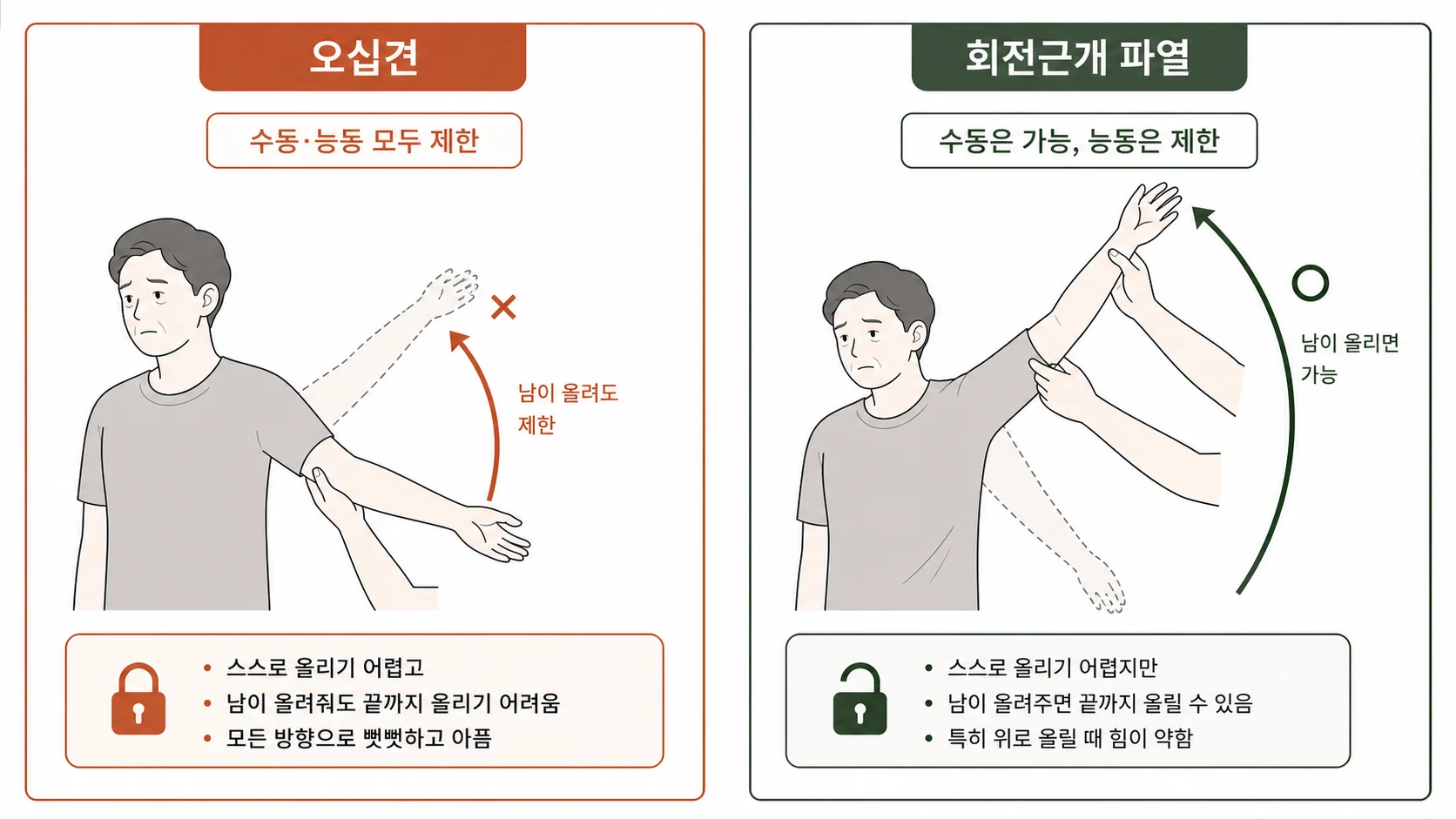
| 구분 | 오십견 | 회전근개 파열 |
|---|---|---|
| 문제 부위 | 관절막 | 힘줄 (회전근개) |
| 주요 증상 | 뻣뻣함, 움직임 제한 | 힘 빠짐, 특정 동작 통증 |
| 다른 사람이 움직여주면? | 그래도 안 됨 | 움직여짐 |
| 야간 통증 | 매우 심함 | 있을 수 있음 |
| 호발 연령 | 40~60대 | 50대 이상 (퇴행성) |
| 자연 경과 | 1~2년 후 자연 호전 가능 | 자연 치유 어려움 |
간단한 자가 체크
오십견 가능성
- 어느 방향으로든 안 움직여짐
- 다른 사람이 움직여줘도 안 됨
- 뒤로 손 돌리기가 특히 힘듦
- 밤에 욱신거리며 잠을 깸
회전근개 파열 가능성
- 움직일 수는 있지만 힘이 안 들어감
- 다른 사람이 도와주면 움직여짐
- 특정 각도에서만 아픔
- 팔을 들다가 툭 떨어지는 느낌
둘 다 있는 경우도 있습니다
오래된 회전근개 문제가 이차적으로 오십견을 유발할 수 있습니다. 정확한 진단을 위해 전문의의 기능 평가가 필요합니다.
함께 많이 묻는 질문
참고 논문
- Tashjian RZ. Epidemiology, natural history, and indications for treatment of rotator cuff tears. Clin Sports Med. 2012;31(4):589-604.
- Zuckerman JD, Rokito A. Frozen shoulder: a consensus definition. J Shoulder Elbow Surg. 2011;20(2):322-325.
- Hegedus EJ et al. Physical examination tests of the shoulder: a systematic review with meta-analysis of individual tests. Br J Sports Med. 2008;42(2):80-92.
- Calis M et al. Diagnostic value of clinical diagnostic tests in subacromial impingement syndrome. Ann Rheum Dis. 2000;59(1):44-47.
최종 검토일: 2026-07-01