Pain when lifting arm, strength not there?
Rotator Cuff Tear — Problem in the tendons that move the shoulder.
Shoulder aches and feels weak when dressing, picking up objects, or lifting arm. Sleeping on painful side at night becomes unbearable.
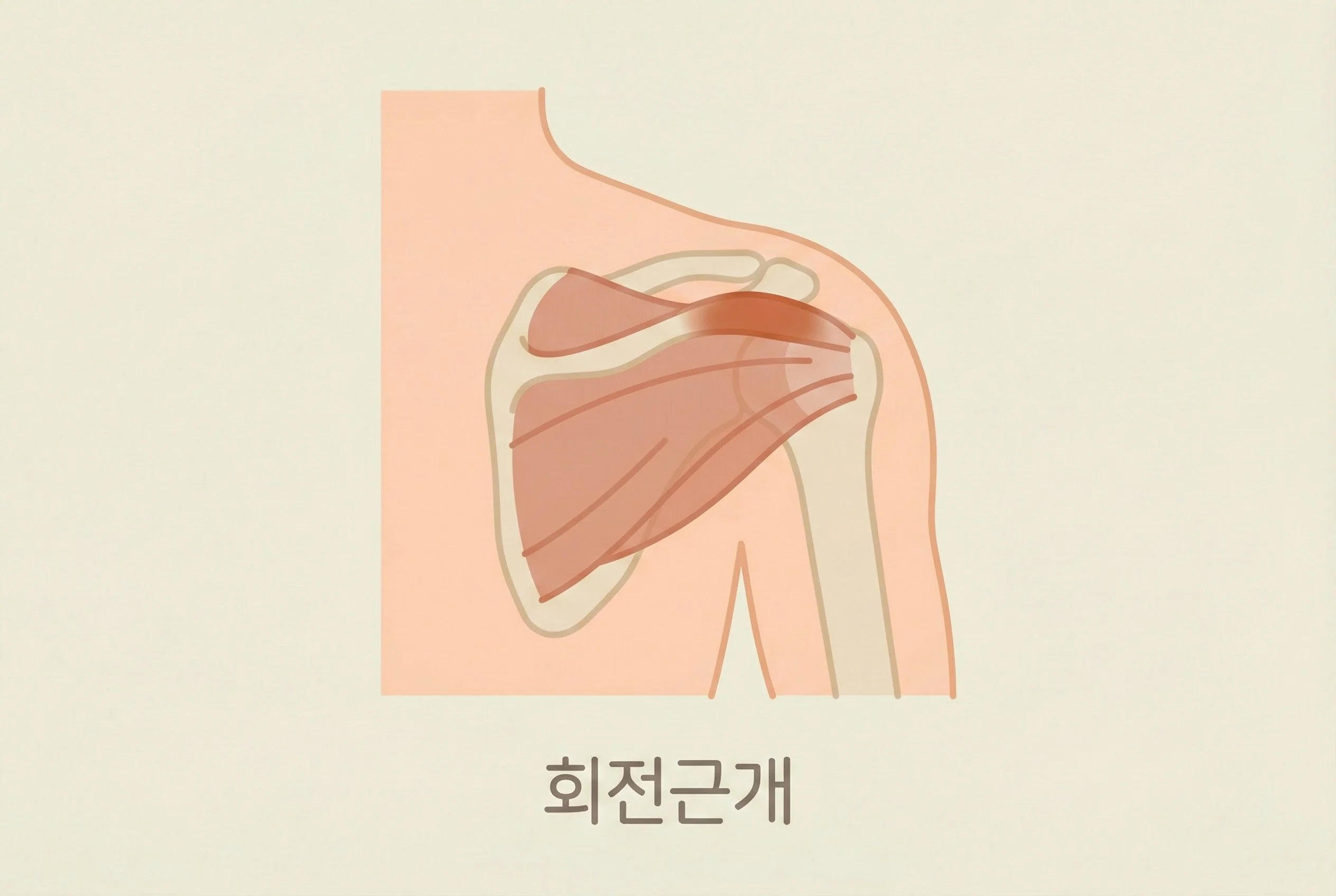
Quick Answer: Rotator cuff consists of 4 tendons that lift and stabilize the shoulder. When torn, pain and weakness in specific movements can be prominent. Important to evaluate not just tear size but pain pattern, function, and lifestyle demands together to establish treatment direction.
Seek medical attention quickly if:
- Sudden inability to lift arm or sharp strength drop after trauma
- Night pain so severe sleep is impossible
- Arm/hand numbness or decreased sensation progressing
- Fever, swelling, warmth with rapidly worsening pain
3 Key Points on This Page
- What rotator cuff is and why it tears
- Treatment direction based on degree of tear
- Cases recoverable without surgery and methods
These symptoms suggest rotator cuff tear
- Front or side shoulder pain when lifting arm — Most painful around 90 degrees of lifting.
- Pain worsens lying on painful side at night — Sometimes accompanied by sleep disturbance.
- Feeling of weakness in arm — Strength doesn’t enter when lifting heavy objects or reaching to high places.
- Difficulty turning arm backward — Hard to raise hand behind back or fasten bra hook.
- ‘Popping’ sound from shoulder — Catching feeling or sound at specific movements.
What is Rotator Cuff?
Rotator cuff consists of 4 tendons wrapping around the shoulder. They lift, rotate, and stabilize the arm.
- Supraspinatus — Lifts arm sideways (most frequently torn)
- Infraspinatus — Rotates arm outward
- Teres minor — Rotates arm outward
- Subscapularis — Rotates arm inward
These tendons pass through narrow space between bones, making them prone to wear from repetitive use or poor posture.
Causes of Tear
- Degenerative changes — Natural wear after age 40
- Repetitive use — Work requiring frequent overhead arm use
- Trauma — Falling or lifting heavy objects
- Posture problems — Impingement from rounded shoulders
Stages of Rotator Cuff Tear
Treatment direction varies by degree of rotator cuff tear:
Tendonitis/Tendinosis
Inflammation or microtrauma in tendon
→ Most improve with conservative treatment
Partial Tear
Part of tendon torn
→ Recovery possible with Circulation therapy + rehabilitation
Full Thickness Tear
Tendon completely severed
→ Consider surgery
Important: Even if MRI shows tear, surgery isn’t immediately necessary. For partial tears, symptom improvement possible with conservative treatment in many cases. Function recovery and pain relief are the treatment core.
Our Approach at Yonsei SM Pain Clinic
Rotator cuff tear requires restoring overall shoulder function, not just ‘treating tendon.’
- Phase 1: Downshift (Circulation HD)
Calm inflammation and release adhesions around damaged tendon. Precise treatment to exact location under ultrasound guidance. - Phase 2: Activate (Circulation PT)
Strengthen weakened rotator cuff and release tension from compensating overloaded muscles. - Phase 3: Integrate
Correct shoulder movement patterns to reduce impingement on tendon. Learn to use shoulder correctly in daily life.
Simple Self-Test
Try these movements. If painful, rotator cuff problem can be suspected:
Empty Can Test
① Lift arm 45 degrees forward, 90 degrees sideways
② Rotate thumb toward floor (empty can pouring posture)
③ Difficult to resist or pain when someone pushes arm down → Suspect supraspinatus tear
Painful Arc Test
① Slowly lift arm from side
② Pain occurs between 60-120 degrees
③ Pain decreases when lifted higher → Suspect rotator cuff or impingement syndrome
Note: Self-test is for reference only. Accurate diagnosis requires specialist examination and ultrasound/MRI tests when needed.
Frequently Asked Questions
How do frozen shoulder and rotator cuff tear differ?
Frozen shoulder involves ‘movement restriction itself’ from stiffened capsule, while rotator cuff problems typically show pain/weakness in specific motions. Accurate differentiation requires evaluation. Differentiation Q&A →
Weakness when lifting arm, is it tear?
Feeling of weakness is common in rotator cuff damage, but pain avoidance or nerve issues can feel similar. Important to evaluate pain location and movement pattern together. Weakness Q&A →
Is shoulder noise a tear?
Can’t determine tear from noise alone. Evaluation needed if noise accompanies pain or catching feeling. Clicking Sound Q&A →
Does rotator cuff tear require surgery?
Treatment direction varies by tear size, degree of function decline, and lifestyle demands. Surgery decision considers ‘function’ and ‘progress’ together with ‘imaging.’ Surgery Necessity Q&A →
Why pain at certain angles when lifting arm?
Pain intensifying at specific angles may be due to ranges where impingement (pinching) or tendon burden increases. Find cause by looking at pain angle and movement pattern together. Arm Raising Q&A →
Worse at night, is it rotator cuff?
Night pain can appear in rotator cuff problems too. May need differentiation from frozen shoulder and other conditions, so we check pain pattern and movement together. Night Pain Q&A →
What should I do at home?
Range-of-motion exercises and strength routine appropriate to current stage are important. Excessive exercise can worsen, safer to establish routine after evaluation. Shoulder Routine Q&A →
Can I keep getting injections?
Injection repeat plans vary by type and purpose. Important to design function recovery and recurrence prevention together rather than just briefly reducing symptoms. Injections Q&A →
References
- Tashjian RZ. Epidemiology, natural history, and indications for treatment of rotator cuff tears. Clin Sports Med. 2012;31(4):589-604.
- Kukkonen J et al. Treatment of nontraumatic rotator cuff tears: a randomised controlled trial with one-year clinical results. J Bone Joint Surg Am. 2015;97(21):1729-1737.
- Ainsworth R, Lewis JS. Exercise therapy for the conservative management of full thickness tears of the rotator cuff: a systematic review. Br J Sports Med. 2007;41(4):200-210.
- Moosmayer S et al. Tendon repair compared with physiotherapy in the treatment of rotator cuff tears: a randomized controlled study in 103 cases with a five-year follow-up. J Bone Joint Surg Am. 2019;101(14):1252-1260. PMID 30601430
Related Articles
Difficulty lifting shoulder?
We evaluate precise rotator cuff tear status and confirm if recovery possible without surgery.
Book Online