Shin Pain After HYROX. Is It Shin Splints?
If pressing along the inner edge of the shinbone produces sharp point tenderness, or if pain intensifies during running, you should rule out shin splints or a stress fracture rather than assuming it is just muscle soreness. Pain that eases with rest but recurs immediately when training resumes also needs evaluation.
Why HYROX Makes Shin Pain Common
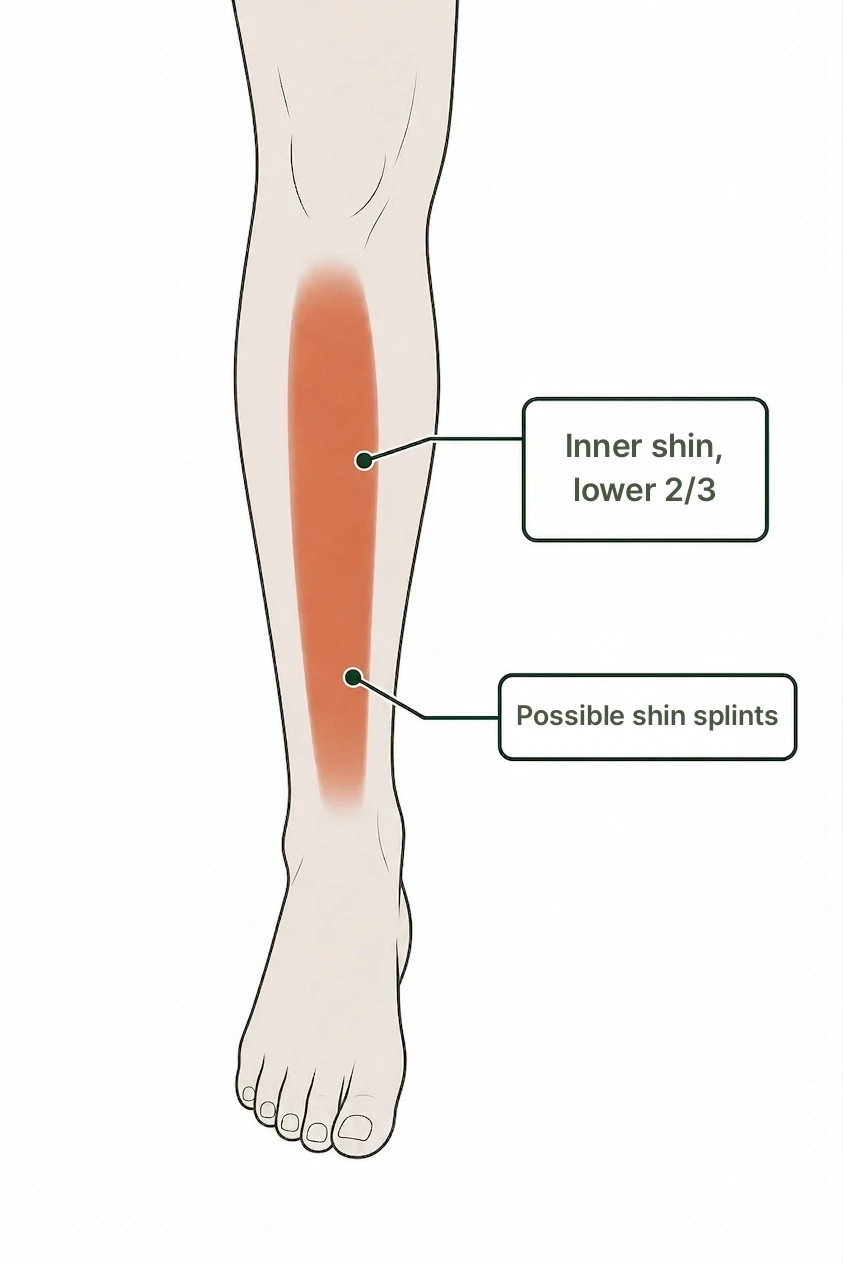
HYROX involves running 1km eight times. If this is significantly more than your usual training volume, cumulative stress can concentrate on the shinbone and surrounding muscles.
1. Rapid Increase in Running Volume
Ramping up running distance quickly for race prep increases the cumulative load on the tibia and surrounding muscles. When the body doesn’t have enough time to adapt to the new load, pain is more likely.
2. Hard Indoor Floors
HYROX events are held on hard indoor surfaces. When ground impact is transferred directly to the ankle and shin without absorption, repetitive stress accumulates rapidly.
3. Restricted Ankle Mobility or Tight Calves
When the ankle doesn’t dorsiflex well or the calf is chronically tight, impact during landing concentrates into the shin. Lunges and burpees add further calf and shin stress on top of the running load.
When It’s Likely Muscle Soreness
If the following pattern applies, it is more likely to be delayed onset muscle soreness.
- The whole calf feels heavy and sore one or two days after training, not immediately after
- Soreness across the whole calf and shin muscle, not at a single point
- Light walking feels like it loosens things up slightly
- Gradually eases over a few days
- No sharp point tenderness when pressing on a specific location
Note: Even if it is muscle soreness, recurring pain in the same location is a signal that your training approach needs review. A pattern of rest-then-repeat is worth investigating.
When Shin Pain Needs Assessment
Pressing Along the Inner Shinbone Causes Pain
If pressing with a finger along the inner edge of the tibia, not the calf muscle, produces clear point tenderness, shin splints (medial tibial stress syndrome) should be considered first.
Pain Intensifies During Running
If pain begins at the start of a run and eases slightly, but over time becomes constant throughout the run or forces you to stop, reduce load and get assessed.
Gets Better with Rest, Worsens Quickly When You Return
If a few days’ rest reduces pain but the same spot hurts again immediately when you resume training, tissue irritation or stress response has not resolved.
Seek Immediate Care for a Possible Stress Fracture
If the following signs are present, a stress fracture needs to be ruled out. Imaging is required to distinguish it from shin splints.
- Pressing one specific point with a finger causes very sharp, intense pain
- The shin aches at night even while resting
- The shin swells after running
- Pain is not improving and is gradually getting worse
3-Stage Response to Shin Pain
Shin pain tends to worsen when pushed through. A staged, load-managed approach aims to support a return to training.
Stage 1: We bring the swelling down
Reduce running distance and intensity, and temporarily limit running on hard surfaces. Continuing the same load while in pain allows stress to accumulate. If needed, Circulation HD is used to assess the response around the shin.
Stage 2: We wake the muscles up
Assess ankle mobility, calf flexibility, and foot arch strength. Shin pain is often connected to restricted ankle and foot movement or a chronically tight calf. Circulation PT and movement correction address these factors.
Stage 3: We make the movement stick
Adjust landing pattern and stride length within a pain-free running range. The goal is reconnecting back into the HYROX run-station-run flow.
How We Assess at Yonsei Shinmyung Pain Clinic
Shin pain requires looking at which tissue is responding, along with running landing mechanics and ankle and calf movement.
We run a finger along the inner edge of the shinbone to find the reactive spot, check how far the ankle bends and how tight the calf sits, and watch how your foot strikes and absorbs shock when you walk and run. Circulation Therapy then guides the way back, easing the load first, restoring ankle and calf movement, and rebuilding your running to full volume.
Shin Pain Self-Check
Can reduce intensity and monitor
- Broad calf soreness with no specific point tenderness
- Gradually easing over the past few days
- Normal walking is possible
- Feels slightly better before running or after warming up
Should consider medical assessment
- Pressing along the inner shinbone produces sharp pain at one point
- Persists more than a week or is worsening
- Same location hurts every time training resumes
- Aches at night while resting
- Shin is visibly swollen
Frequently Asked Questions
Q. Can I keep training if my shins hurt while preparing for HYROX?
It depends on the severity and location. If the soreness is broad, you can reduce intensity and monitor. But if a specific point near the bone is sharply tender, or if pain intensifies while running, it is safer to reduce training and get assessed.
Q. What is the difference between shin splints and a stress fracture?
Shin splints involve repeated irritation of the periosteum (bone lining) and surrounding muscles, while a stress fracture is a micro-crack in the bone itself. A stress fracture typically has very distinct point tenderness, may worsen rapidly when activity resumes after rest, and can include night pain. Imaging is needed to distinguish them if uncertain.
Q. What should I do if I have shin pain close to race day?
With little time remaining, the priority is reducing the running volume and intensity that is causing pain, rather than adding new training. Continuing at high intensity without ruling out a stress fracture can be dangerous.
Q. Do shin sleeves or taping help?
Compression sleeves and taping can provide temporary support but do not address the cause. If pain keeps recurring, running volume, ankle mobility, calf tightness, and landing pattern all need to be reviewed.
Related Articles
References
Shin pain, let’s find out if it’s muscle soreness first
We assess which area is affected and how, and build a training return plan together.
Book Online