There Are Many Headache Types, What’s Mine?
Treatment varies by headache type. Tension-type and cervicogenic headaches improve with neck and shoulder treatment, but migraine requires a different approach. Understanding headache characteristics can help identify the type.
Characteristics by Headache Type
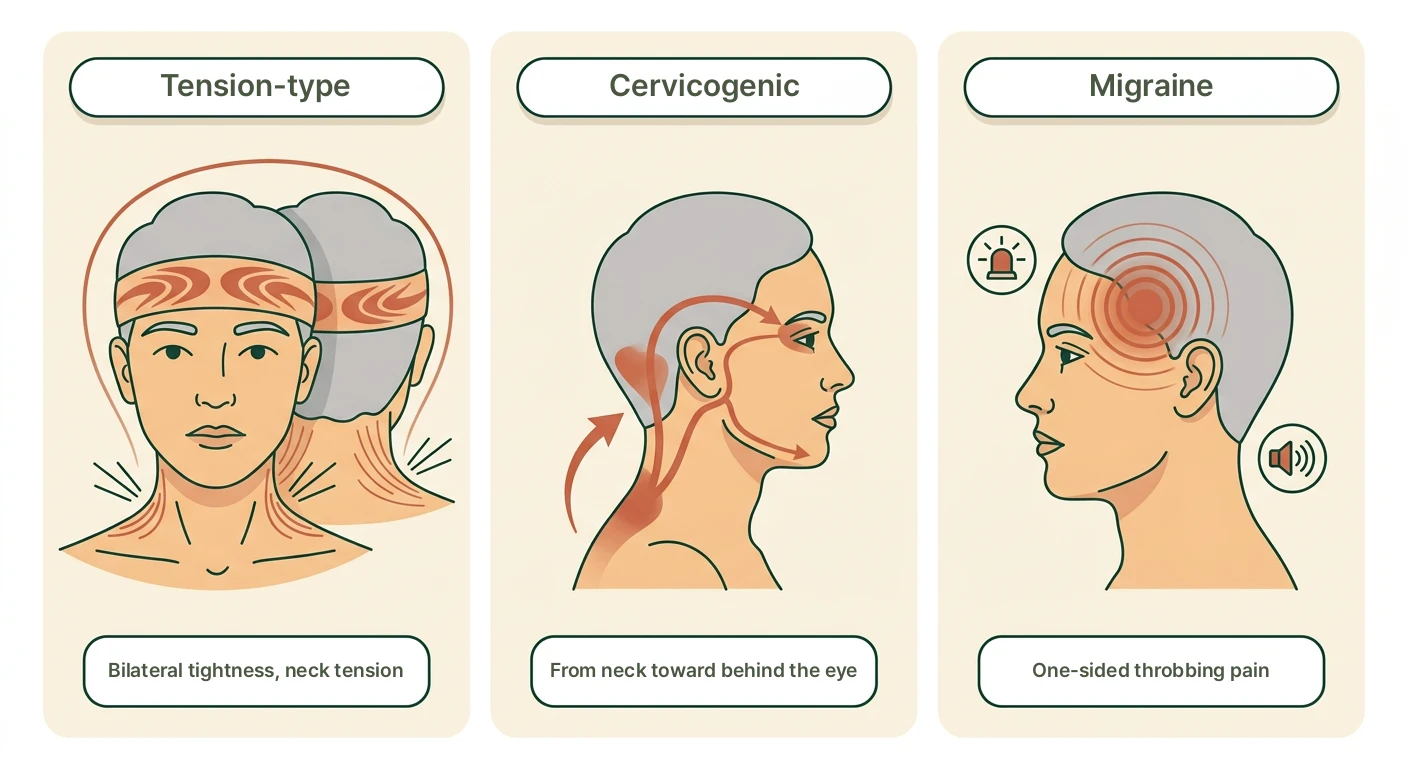
Tension-Type Headache
Sensation: Band-like tightness, heavy feeling
Location: Both sides of head, forehead, back of head
Associated symptoms: Neck/shoulder stiffness
Triggers: Stress, prolonged computer work
→ Can improve with Circulation Therapy
Cervicogenic Headache
Sensation. Starts from back of neck and ascends to head
Location. Usually one-sided, occiput → side of head → behind eyes
Associated symptoms: Neck pain, worsens with neck movement
Triggers: Neck movement, posture
→ Can improve with Circulation Therapy
Migraine
Sensation: Throbbing, pulsating pain
Location: Usually one side of head
Associated symptoms. Nausea, light and sound sensitivity, visual aura
Triggers: Hormones, certain foods, sleep deprivation
→ Neurology specialist treatment recommended
Neck and Shoulder-Related Headaches Respond Well to Circulation Therapy
Tension-type and cervicogenic headaches improve with neck and shoulder fascial treatment and posture correction. Treat the root cause rather than relying on headache medication.
Headaches That Can Improve with Circulation Therapy
- Tension-type headache
- Cervicogenic headache
- Myofascial referred pain headache
Frequently Asked Questions
References
- Ashina M. Tension-type headache. N Engl J Med. 2020;383(17):1675-1682. PMID 34537167
- Stovner LJ, Hagen K, Jensen R et al. The global burden of headache: a documentation of headache prevalence and disability worldwide. Cephalalgia. 2007;27(3):193-210. PMID 17381554
- Bogduk N, Govind J. Cervicogenic headache: an assessment of the evidence on clinical diagnosis, invasive tests, and treatment. Lancet Neurol. 2009;8(10):959-968.
- Headache Classification Committee of the International Headache Society (IHS). The International Classification of Headache Disorders, 3rd edition. Cephalalgia. 2018;38(1):1-211. PMID 29368949